Feasibility & Pricing — Internal Decision Platform
Flagship Internal Product · B2B · Healthcare Research. Designing a core internal platform that enables teams to evaluate feasibility and generate accurate pricing — supporting confident decisions at scale.
Role
Product Designer
Industry
Healthcare Market Research
Duration
3 months
Key Design Decision #1
Designing a Guided System Instead of a Flexible Spreadsheet
The challenge
Spreadsheets offered maximum flexibility, but they also made outcomes inconsistent and hard to trust. Different users could approach the same request in different ways, leading to varied results and uncertainty around feasibility and pricing.
At the same time, the system couldn’t be overly rigid — teams still needed room to handle edge cases and nuanced scenarios.
The decision
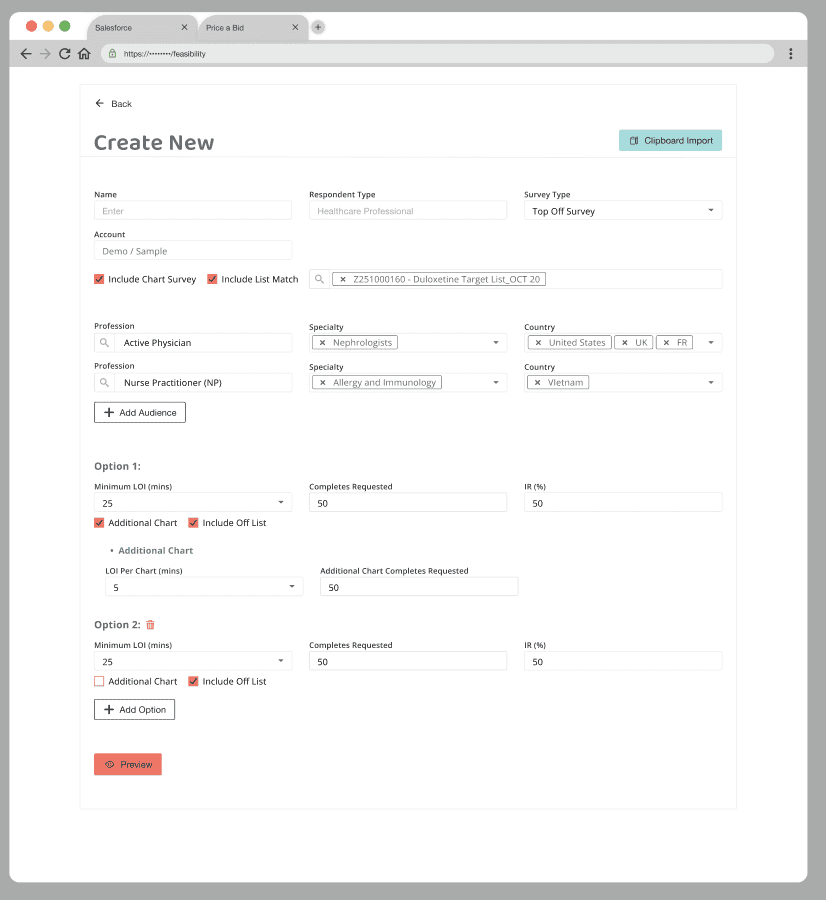
I designed a guided workflow that structures how inputs are collected and how decisions are made, while still allowing flexibility where it matters.
Rather than asking users to “figure it out,” the system leads them step by step, making key assumptions visible and reducing opportunities for error.
Why this mattered
This approach shifted the work from manual problem-solving to informed decision-making:
• Teams spent less time figuring out how to calculate
• More time understanding why a result made sense
• Outcomes became more consistent across users and teams
The platform didn’t remove human judgment — it supported it with clarity and structure.
Key Design Decision #2
Making Complex Outcomes Understandable — Not Just Accurate
The challenge
Feasibility and pricing results depend on many variables working together. While the system could generate accurate outputs, those numbers alone were not enough — users needed to understand why a result looked the way it did in order to trust it and explain it to others.
Without clarity, even correct results could feel risky or arbitrary.
The decision
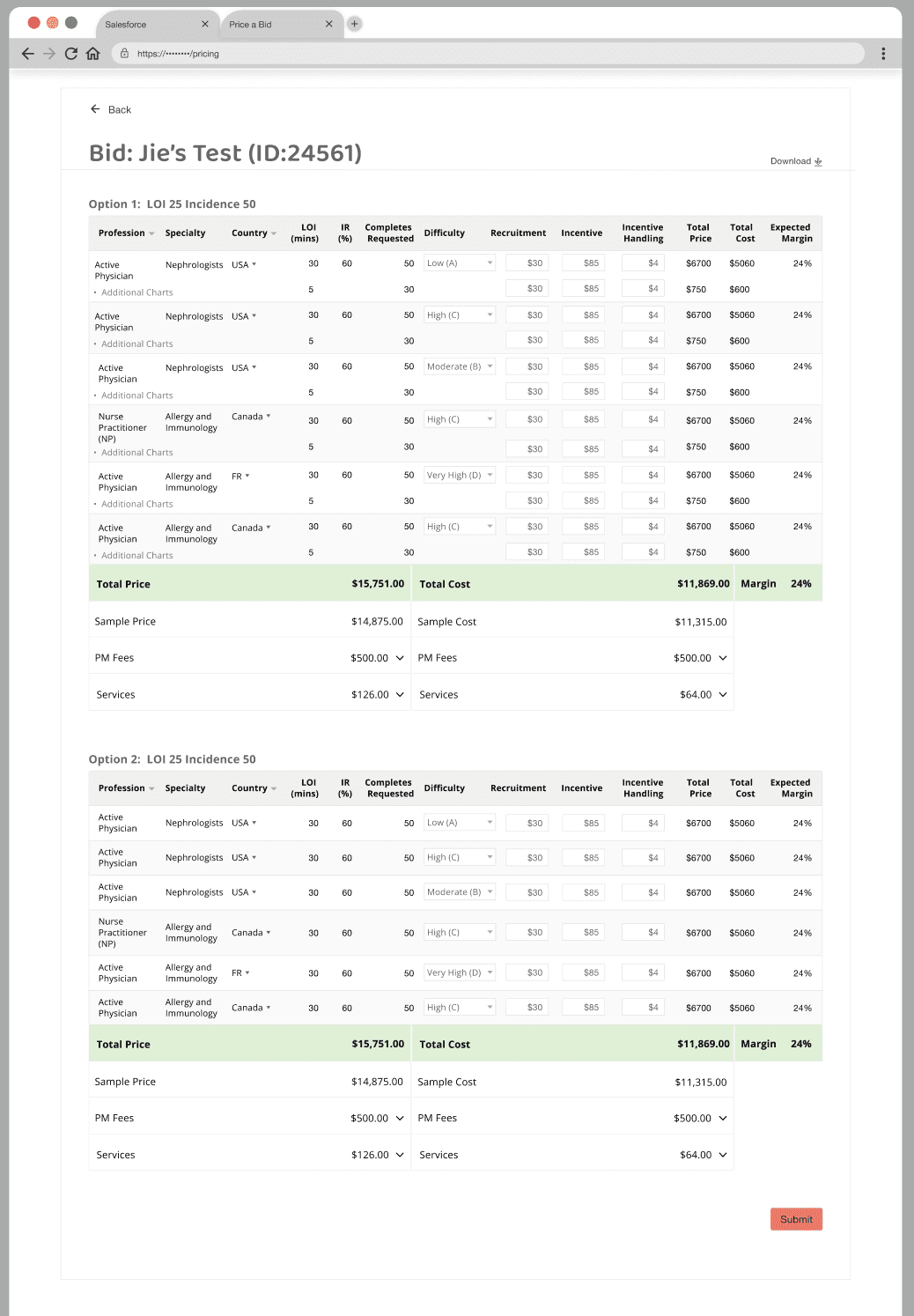
I designed the experience to surface key drivers behind each outcome, rather than presenting a single final number.
Instead of treating feasibility and pricing as a black box, the system makes underlying assumptions visible and groups information in a way that helps users quickly see what is influencing the result.
Why this mattered
This approach helped users move from simply accepting outputs to actively understanding them:
• Users could quickly identify which inputs were driving feasibility or cost
• Conversations shifted from “Is this number right?” to “What would change it?”
• Teams felt more confident sharing and defending decisions across functions
By prioritizing explainability over compression, the platform supported better decision-making — not just faster calculations.

2A: Feasibility Results Table
Feasibility results are presented in a structured table, allowing teams to compare scenarios and identify potential risks before moving forward.
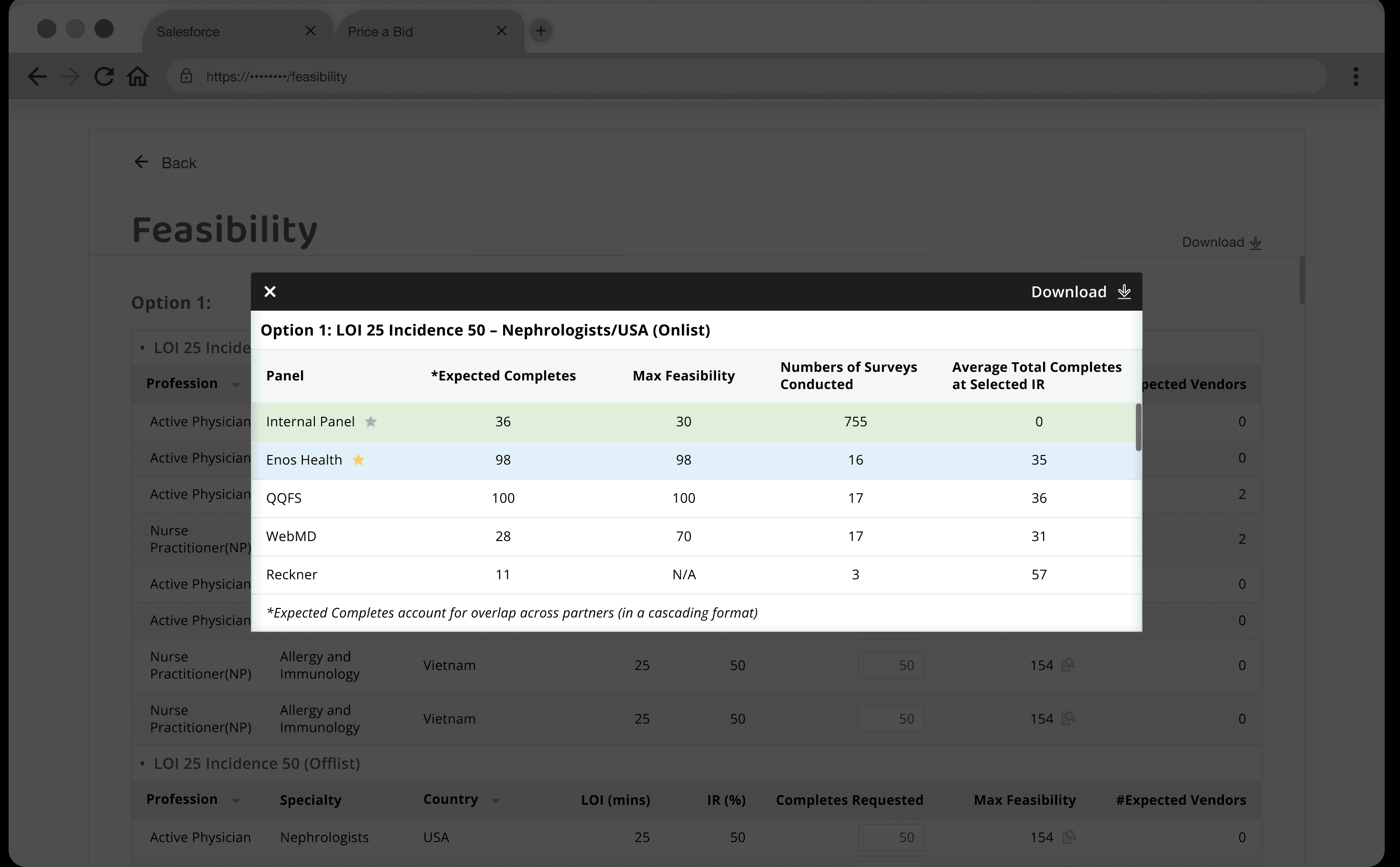
2B: Panel Details Popup(check icon click)
Clicking into a scenario reveals how feasibility is calculated across internal and partner panels, helping teams understand and trust the results.
Key Design Decision #3
Building a Scalable System From Day One
The challenge
This platform was built from scratch to replace a fragmented workflow that previously relied on spreadsheets, Salesforce exports, and manual quote adjustments. From the beginning, it was clear that feasibility and pricing needs would continue to evolve as the business grew.
Designing only for current use cases would quickly recreate the same fragmentation the team was trying to move away from.
The decision
I designed the platform around flexible structures and reusable patterns, rather than hard-coding logic for a single scenario.
Inputs, rules, and outputs were organized so that new audiences, countries, and pricing logic could be added without changing the core workflow or user experience.
Why this mattered
Starting with a scalable foundation allowed the platform to grow without constant redesign:
• New use cases could be supported without rebuilding the system
• Teams could adapt to change without relearning the workflow
• The product avoided drifting back toward spreadsheets and manual work
By treating scalability as a first-class requirement, the platform was able to support long-term growth instead of becoming a short-term solution.
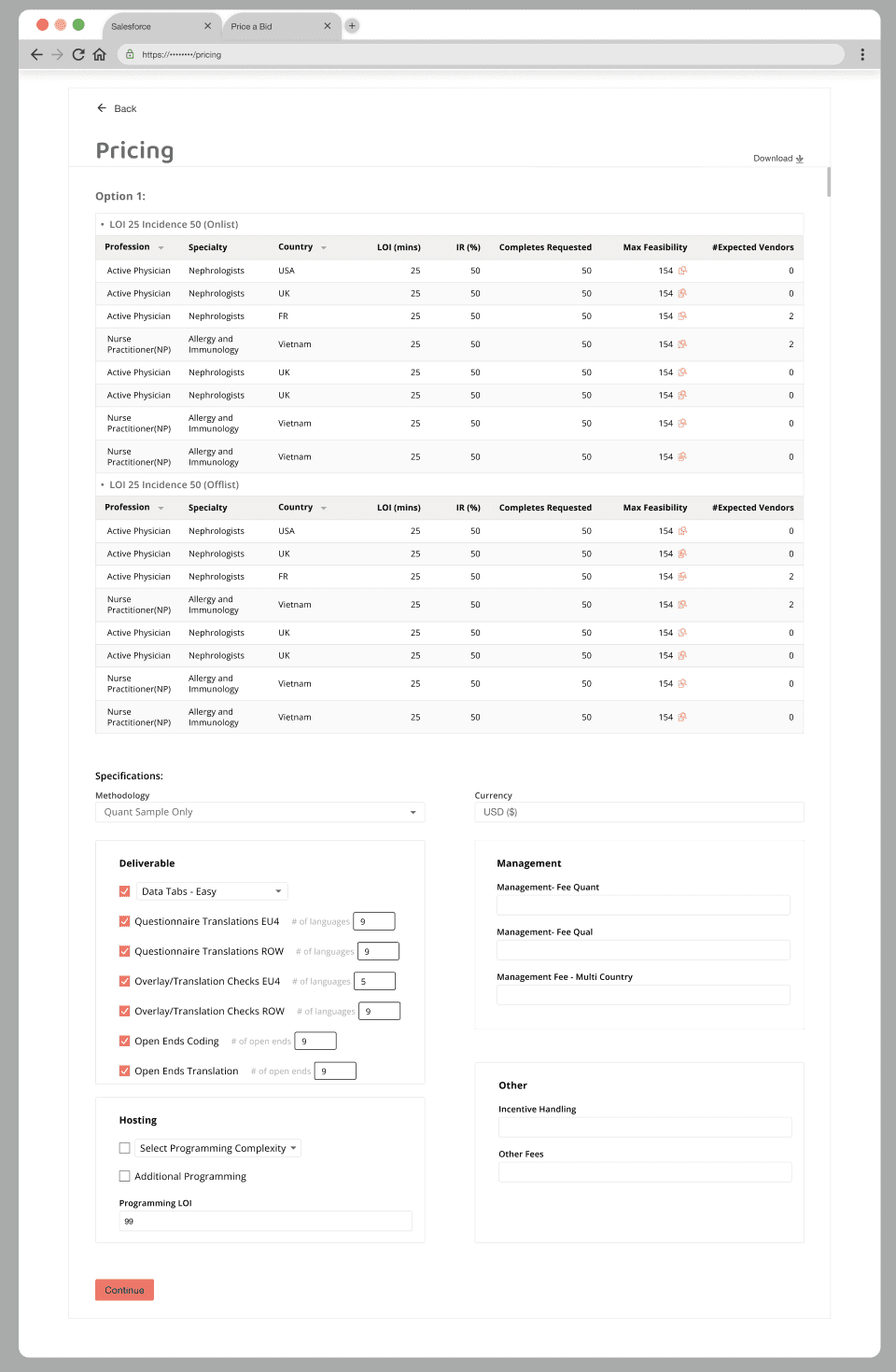
3A: Pricing Input
After feasibility is confirmed, teams configure pricing inputs within the same system, defining deliverables and parameters that shape the final quote.
Other projects
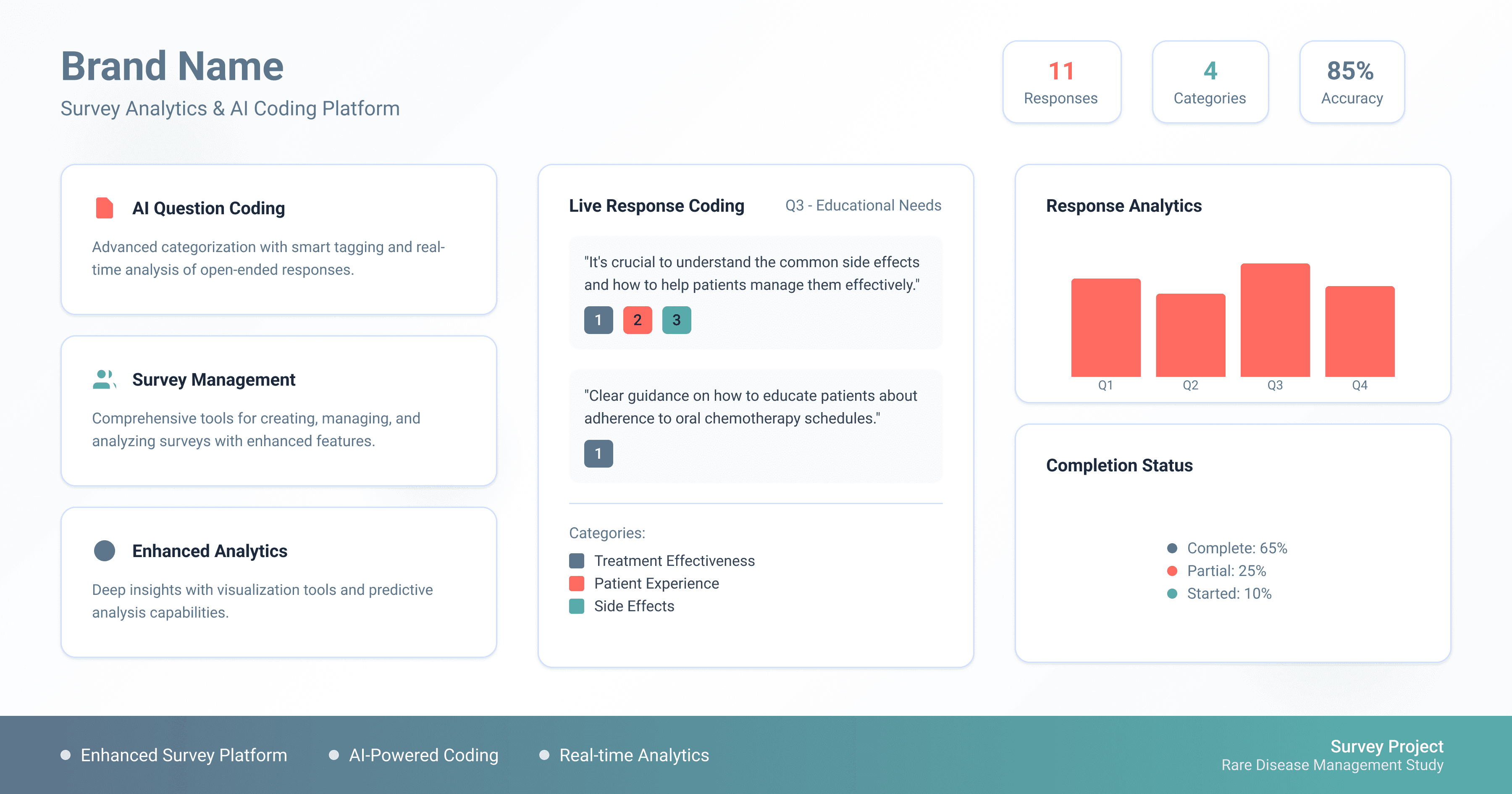
AI-Assisted Survey Response Analysis Tool
An AI-assisted research tool that helps teams analyze and categorize open-ended survey responses—while keeping human judgment firmly in control.
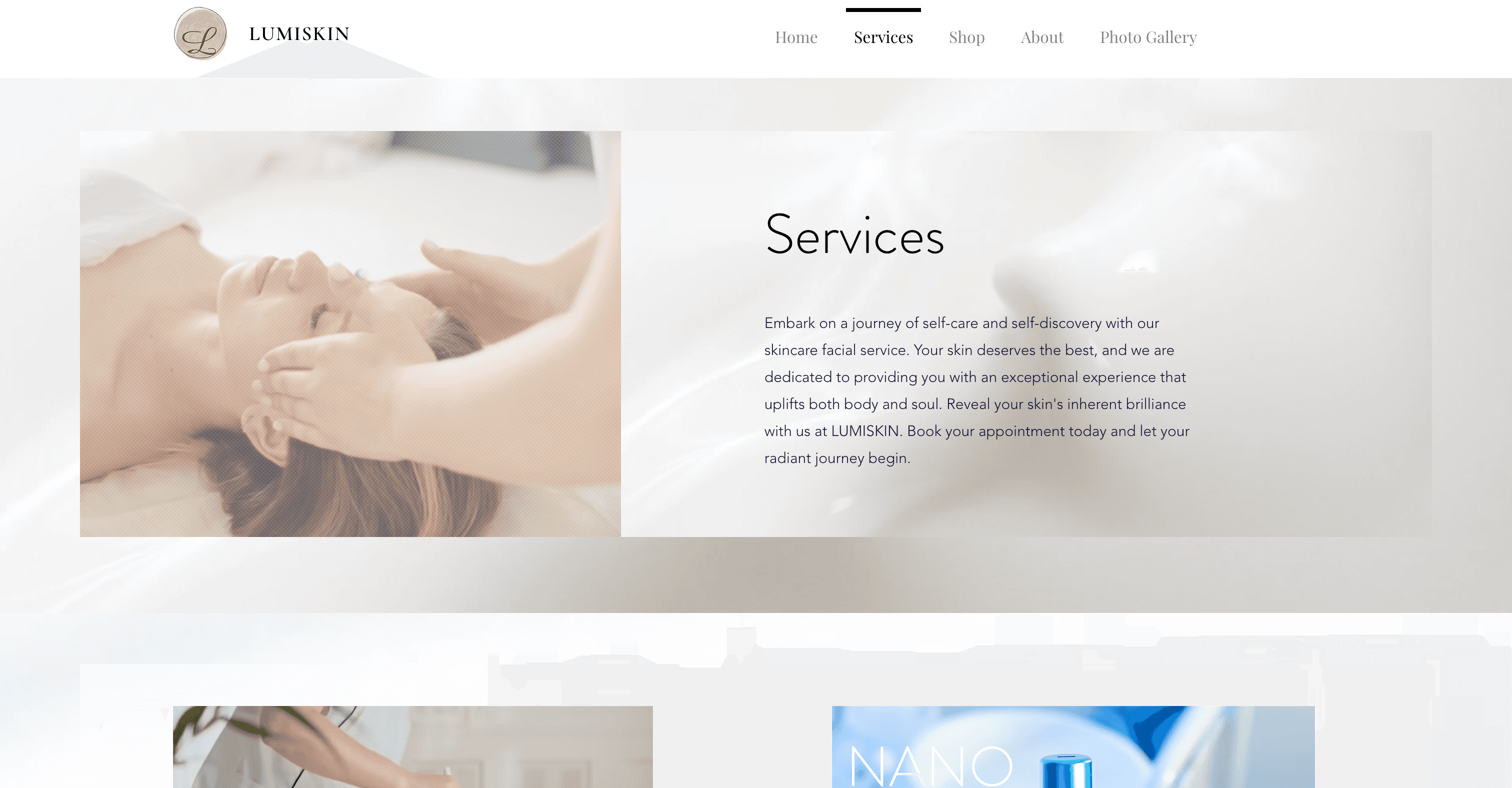
Beauty Spa Startup — Marketing Website
Designed and launched a marketing website for a beauty spa startup, creating a calm, trustworthy digital experience that guides users from service discovery to booking.

Education Platform — University Application Support Website
Designed and launched a content-driven education platform to support students navigating the university application process. The website focuses on clarity, structure, and trust—helping users quickly understand services and take next steps with confidence.